What we're seeing across the sector.
Platform migration, AI governance, CRM modernisation, and the operational reality of running a wealth management technology estate — written by the people who build the systems, not a marketing team.
All insights
No insights in this category yetTry a different filter, or view all insights.
-
 AI & Technology
Now Show Me How: Going Headless in 12 Weeks
The principle landed: your next CRM shouldn't be a CRM. The feedback was unanimous — agreed, now show me how. Here is the twelve-week plan to get the headless pattern live in production.
-
 Platform Strategy
Buy, Don't Build — Until the Build Got Easy
For twenty years wealth management lived by "buy, not build". AI frontier models have collapsed the cost of building — so the question is no longer buy versus build, but where you draw the line and how you build it safely.
-
 AI & Technology
Blown the Bloody Doors Off: How AI is Rewriting the Rules of Wealth Tech Development
Claude has eliminated the barrier between having an idea and shipping production-grade software. The gap between what your firm needs to build and what you can afford to build just closed.
-
 Platform Migration
Rigour Over Speed: Navigating the Fiduciary Realities of Bulk Migrations
Why fiduciary duty and regulatory rigour must govern bulk migration strategy — and why the firms rushing to replatform without it are creating systemic risk for their clients.
-
 Consolidation
Navigating the Evolution: Insights into the Winners' Profile for Advice Consolidation in the UK
The market dynamics for advice firm consolidators are changing as higher interest rates make debt more expensive and the FCA's Consumer Duty regime increases pressure to demonstrate fair value to clients. Acquisitions fell 10% in 2023, and the traditional model of financial engineering and EBITDA multiple uplift is no longer sufficient. The winners in the next consolidation phase will be those who build operational excellence, own more of the value chain, and deploy modern integrated technology to reduce cost-to-serve and deliver genuine client value.
-
 Platform Strategy
Adviser-Controlled Platform Support Team: Creating Value by Design
This article examines whether adviser-controlled platforms are economically viable, arguing that scale — particularly AUA above £1bn and consolidation of ten or more legacy platforms — is the key determinant of cost-effectiveness. It outlines a three-team in-house support model (first-line support and operations, transfers, and performance optimisation) built on three core principles: primacy, vanilla adoption, and value-driven migration. The article also explores the key enablers of this model and provides practical guidance on team sizing and when alternative platforms may be a better fit.
-
 Automation
Automating the LOA process; maximising the work not done
The LOA (Letter of Authority) process in wealth management is plagued by delays — taking anywhere from 10 to 60 days — due to fragmented, manual workflows with no standardised way to submit or track requests. The article argues that applying Agile principles, particularly the idea of "maximising the work not done," alongside tools like Kanban boards and Origo's Unipass LOA service, can dramatically streamline the process. Automating the LOA process is framed as a quick win for platforms and advisers alike, with clear commercial and client-experience benefits.
-
 Analytics
Cost to Serve, the most important KPI you aren't using
Cost to Serve is a model that calculates the true cost of serving each client cohort by distinguishing between value-adding activities and avoidable "failure demand." Analysis using this metric reveals that a significant portion of operational workload is generated by low-value clients who are effectively cross-subsidised by the broader client base. By applying Cost to Serve data, firms can streamline processes, realign their service proposition, and dramatically improve profitability for all stakeholders.
-
 Analytics
Reducing cost to serve for high touch low value clients
This article applies the cost-to-serve framework to the challenge of high-touch, low-value clients, distinguishing between "value demand" interactions that drive profitability and "failure demand" contacts that create avoidable costs. The author outlines a practical approach — from clarifying propositions and building customer personas to removing digital barriers and designing target customer experiences — to shift modest-pot clients toward self-service channels. It concludes that emerging AI tools, such as AI-powered chatbots like Klarna's, may ultimately help even the most resistant clients find unexpected value in digital engagement.
-
 Platform Strategy
From wrap platforms to ecosystems, the iPhone moment has arrived
The article argues that legacy wrap platforms face existential pressure from a new generation of ecosystem-first propositions — exemplified by Soderberg UK's partnership with SECCL, Plannr, and Morpheus Wealth — where the platform becomes invisible, the CRM is the primary interface, and high-volume journeys are fully automated. Drawing on interviews with Barry O'Dwyer and an NMA roundtable, author Kirk Hullis contends that tight integration and automation will define the winning model. He compares the moment to Apple's 2007 iPhone launch, predicting that legacy platforms anchored to outdated technology face the same fate as Nokia — extinction within years.
-
 Market Insight
How £3.4bn of Debt is Impacting Financial Advice & Wealth Management Platforms
Private equity-driven consolidation has saddled many financial advice firms and wealth management platforms with unsustainable debt, leaving them unable to invest in technology, retain clients, or respond strategically to competitive pressures. The article argues that the gold rush of consolidation is over, and that platforms constrained by double-digit interest rates and legacy operating models face a bleak outlook including potential extinction. Only those who pivot to sustainable value creation — through genuine cost and revenue synergies and superior client experiences — will survive the coming shake-out.
-
 Platform Migration
Industrialising Wealth Platform Migration: From a High-Stakes Gamble to Predictable Execution
Wealth platform migration has undergone a dramatic transformation — once a high-risk, multi-year gamble, replatforming is now a repeatable, industrialised process. Three converging forces — experienced advisers, mapped end-to-end processes, and modern AI-assisted tooling — have compressed timelines from years to months. The article argues that firms are held back not by complexity but by strategic hesitation, and sets out a practical framework for building a compelling case for change, defining a consent strategy, and choosing the right migration approach.
-
 Platform Migration
Replatforming doesn't have to be a leap of faith
Changing platforms in wealth management is widely seen as a high-effort, high-risk event, but new switch workbenches and maturing technology from new entrants are beginning to change that. This article sets out a three-step approach — visioning the future business, developing the target operating model, and defining rigorous selection criteria — to help advisers make the replatforming decision with greater confidence. Rather than buying a "better mousetrap", the aim is to re-imagine what a modern platform ecosystem can genuinely offer.
-
 Platform Migration
Replatforming without tears: Do You Feel Lucky?
Drawing on findings from the Defaqto Service Review 2024 — where 34% of advisers changed their main platform — this article explores why firms are reluctant to replatform despite growing pain points such as service failures and rising costs. It sets the scene for a forthcoming series offering a practical, step-by-step guide to replatforming that aims to reduce client disturbance, risk, and effort.
-
 Automation
Seamless Platform Switching: How Automation is Revolutionising Asset Transfers
Despite progress in transfer automation through services like Origo and STAR, advisers remain reluctant to initiate asset transfers due to perceived effort, lack of expertise, and fear of client disturbance. Established and challenger platforms are building end-to-end transfer solutions — featuring automated lifecycles, dedicated teams, and regulatory consultancy — to make seamless transfers a competitive differentiator. The article argues that growing confidence from case studies will accelerate a land grab, threatening legacy platforms and old-school life offices unable to keep pace.
-
 Market Insight
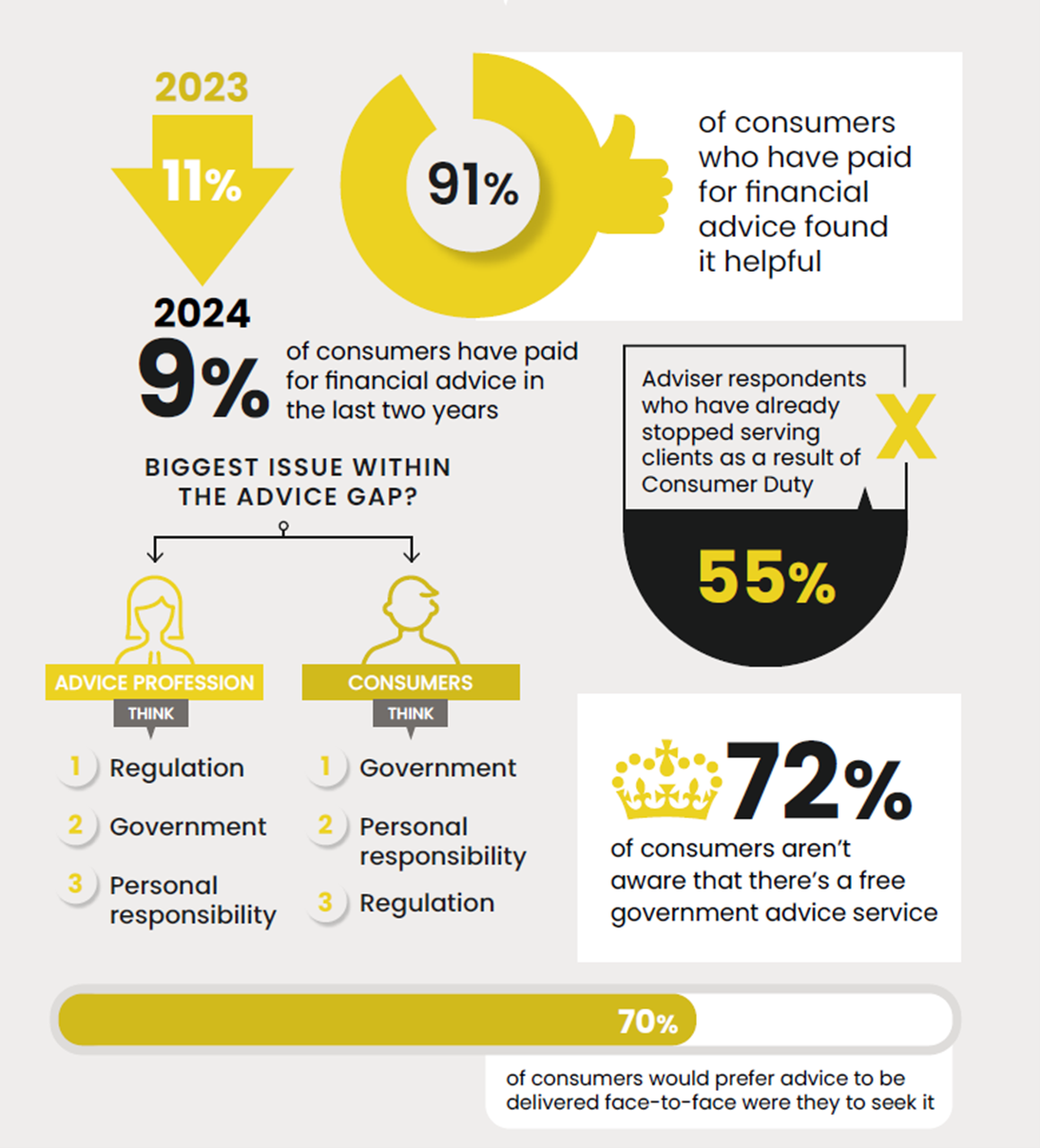
The Advice Gap: It's an efficiency and ambition gap constrained by price, trust and regulation
The Advice Gap, as documented in the Lang Cat's 2024 report, is fundamentally an ambition and efficiency problem: advisers vastly underestimate how many clients they could serve because they lack exposure to modern integrated technology and automation. The article argues that with the right operating models, regulatory reform, and a genuine moonshot mindset, adviser-to-client ratios could move from around 110 today to 500 or even 1,000 — not a modest 50% improvement. Closing the gap requires firms to reimagine legacy technology, adapt pricing and propositions, and build confidence that financial advice can be made accessible to a far broader market.
-
 AI & Technology
The Big Lift: Why Bulk Migration is the Bridge to AI-Ready Wealth Platforms
This article argues that bulk data migration — moving an entire book of business at an aggregated asset level in a single event — is the most effective method for wealth platform replatforming, benefiting both clients and firms. A well-executed bulk migration preserves clients' full financial history and tax positions with minimal disruption, while forcing the data cleanup that produces a pristine, structured dataset. That clean foundation is what unlocks genuine AI readiness, transforming client data from a liability into a strategic enabler.
-
 Platform Strategy
The financial case for adopting a white-label platform; a no-brainer for consolidators?
Legacy wealth platforms face an existential squeeze as the cost of running a platform approaches the revenue it generates, driven by market saturation, poor differentiation, and downward fee pressure. The article makes the financial case for larger advice firms and consolidators to adopt white-label platforms, showing that fee savings of 5–10 basis points on multi-billion-pound AUA can generate millions in annual savings that easily outweigh increased operational costs. The author argues the shift is a near-inevitable no-brainer for consolidators and urges firms to act before legacy platform failures force a crisis-driven response.
-
 AI & Technology
Mastering Efficiency: How AI Transcription Can Help You Run Three Client Meetings Daily Without Breaking a Sweat
This article argues that IFA practices can dramatically increase adviser capacity — from around 110 clients to 200 or more — by adopting AI transcription tools to automate client meeting notes and post-meeting administration. By combining virtual meeting formats, clustered meeting schedules, and tools like Otter.ai, advisers can run three client meetings a day without generating additional paperwork. The approach also delivers a compliance benefit through a built-in, automatically generated audit trail.
-
 Market Insight
Wealth Management Predictions for 2025: When Small Changes Lead to Big Results
The article identifies four key tipping points set to reshape the UK wealth management industry in 2025: platform consolidation accelerating as subscale and debt-laden operators become unviable, AI becoming as fundamental as electricity by driving adviser productivity and automating compliance, the advice gap widening as Consumer Duty pushes firms upmarket and leaves room for tech-enabled new entrants, and the newly formed Platform Association pressing regulators to mandate enforceable asset transfer SLAs. The authors argue that 2025 is the year these trends gather irreversible momentum rather than mass adoption, with an estimated £15–20 billion of assets expected to move platform.
-
 Platform Strategy
Wealth Platforms 2026: Why the Ecosystem is the New Competitive Weapon
The UK wealth management industry in 2026 is experiencing a tipping point where adviser frustration with fragmented tech stacks and the demands of Consumer Duty are accelerating the demise of legacy platforms. Integrated technology ecosystems — not individual best-of-breed tools — have become the primary competitive weapon, driving a wave of platform migrations toward API-first, tech-native challengers. Firms unable to deliver seamless integration face an existential threat, while those with proprietary or fully connected stacks are capturing a disproportionate share of new inflows.
-
 Education
What's a wealth management platform? Ask the butcher, the baker, and the candlestick maker.
The article explores how industry professionals define a "wealth management platform," finding that no single definition exists. Experts from across the sector agree that platforms are evolving from monolithic, layered systems into API-driven ecosystems where core functions become interoperable, commoditised utilities. The author concludes that the concept of a "platform" as we know it will likely disappear, replaced by open-architecture plumbing and services.